

Forums › Knowledge Base › Debugging Two-stage Flight at MHM – The Twins
- This topic has 38 replies, 12 voices, and was last updated 17 years, 4 months ago by
 slipstick.
 slipstick.
-
AuthorPosts
-
2008-05-08 at 6:27 am #47844
 slipstick
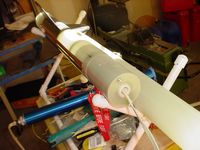
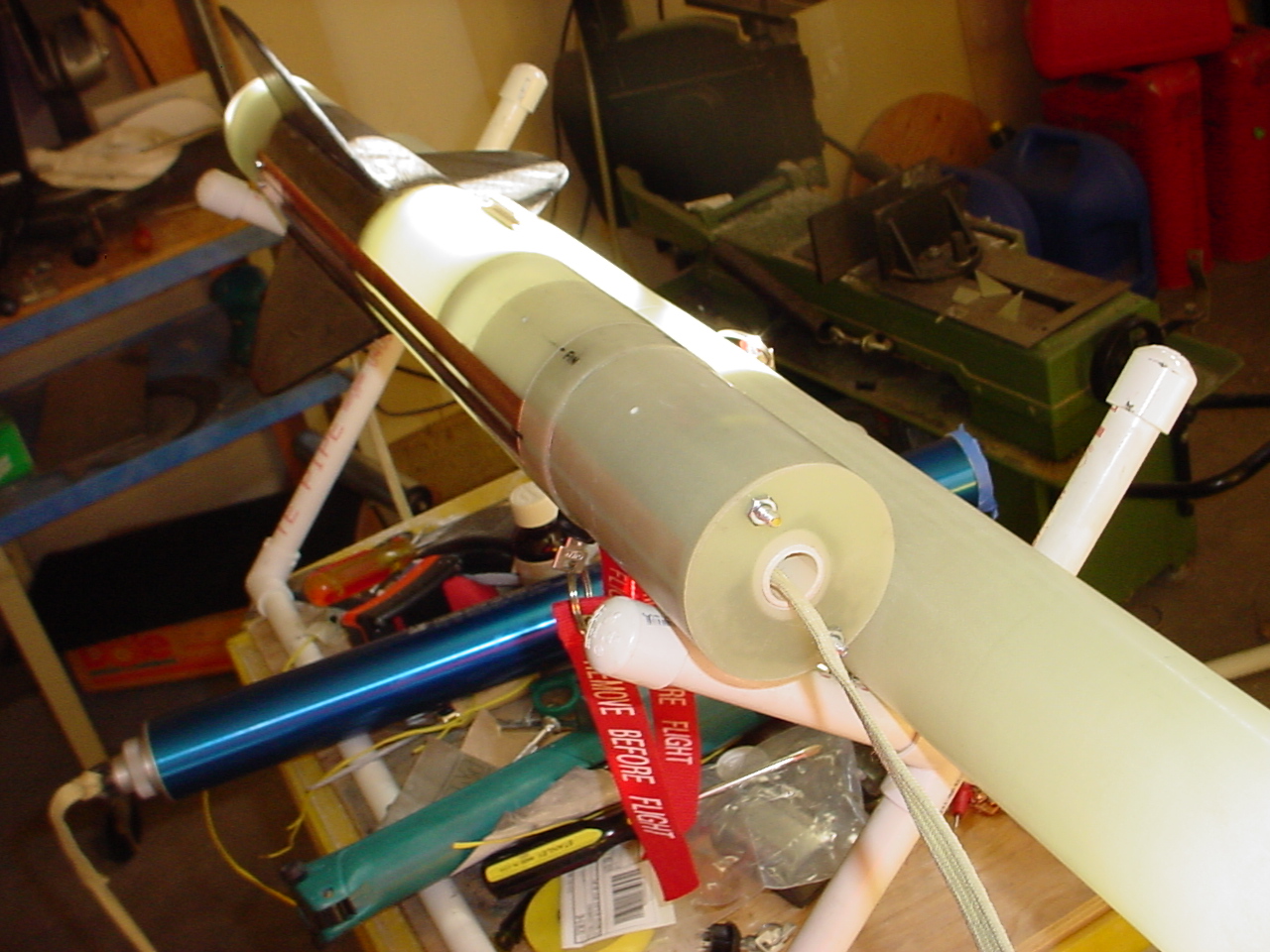
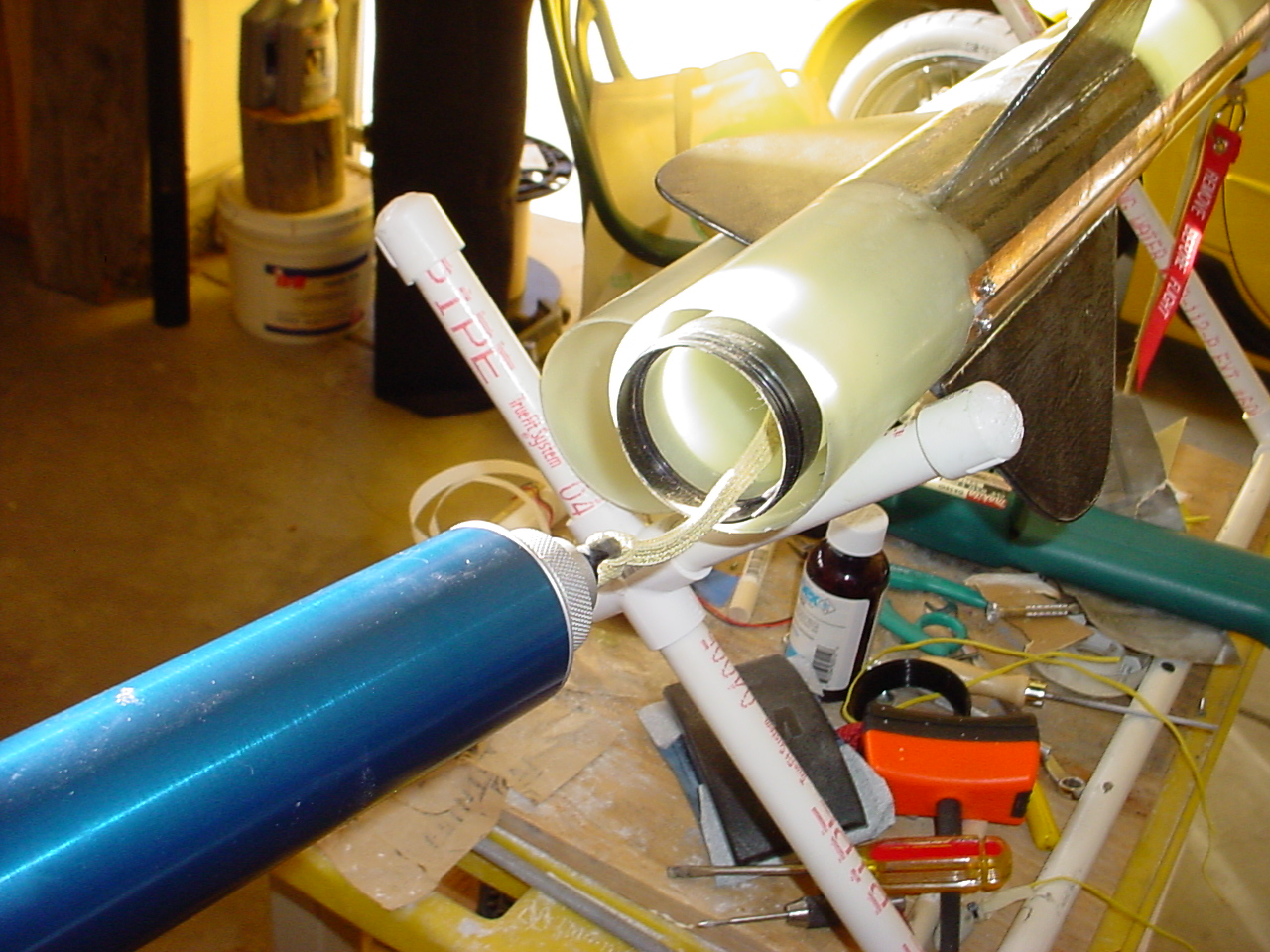
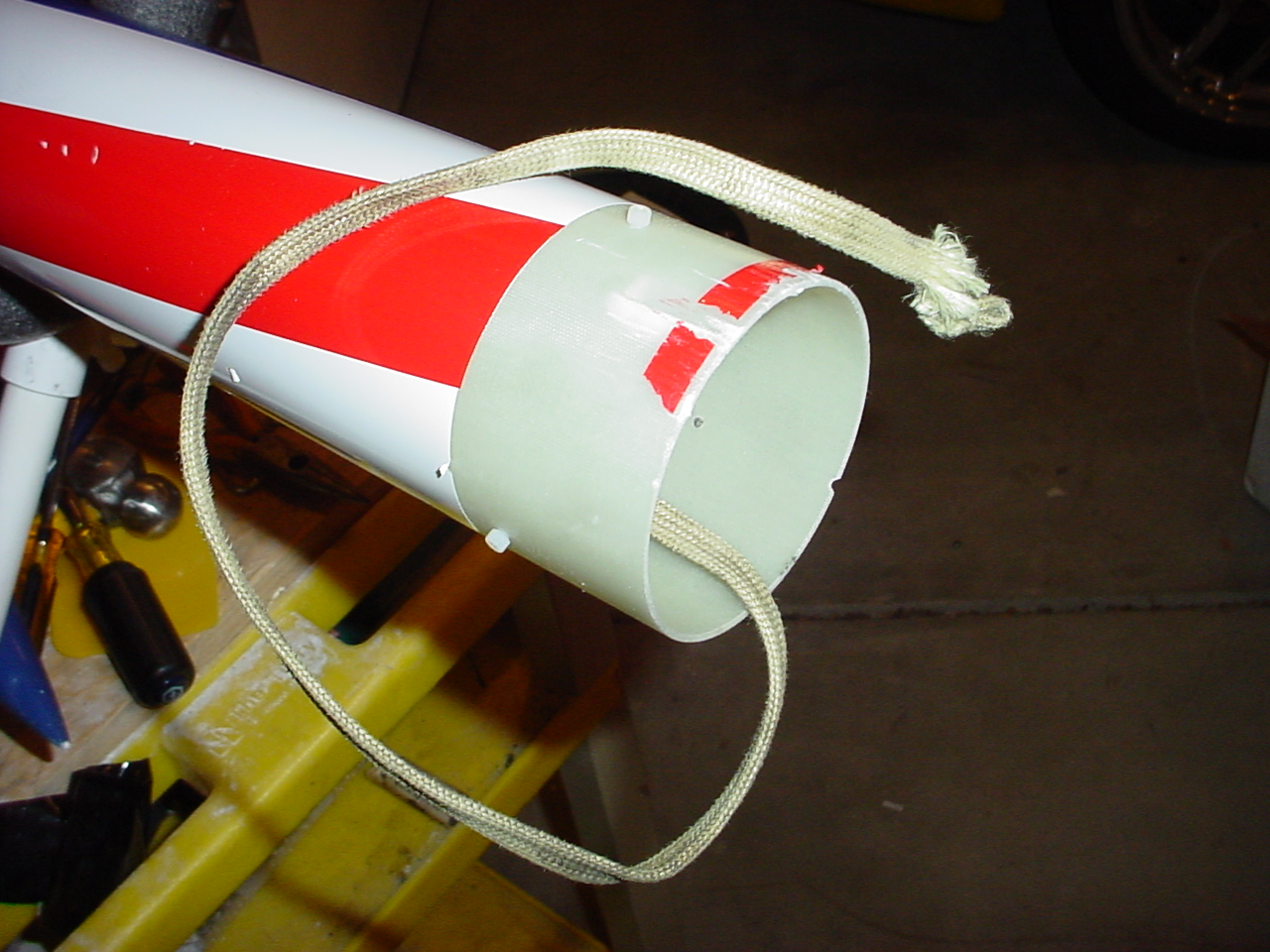
Here’s a picture of the fin can. You can see how much overlap I have on the coupler containing the igniter timer. The coupler was attached to the fin can with 3 4-40 steel screws, and three 4-4- nylon screws were used for shear pins. The exposed all-thread was covered with vinyl tape before final assembly.

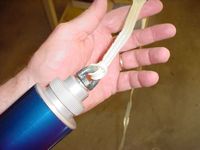
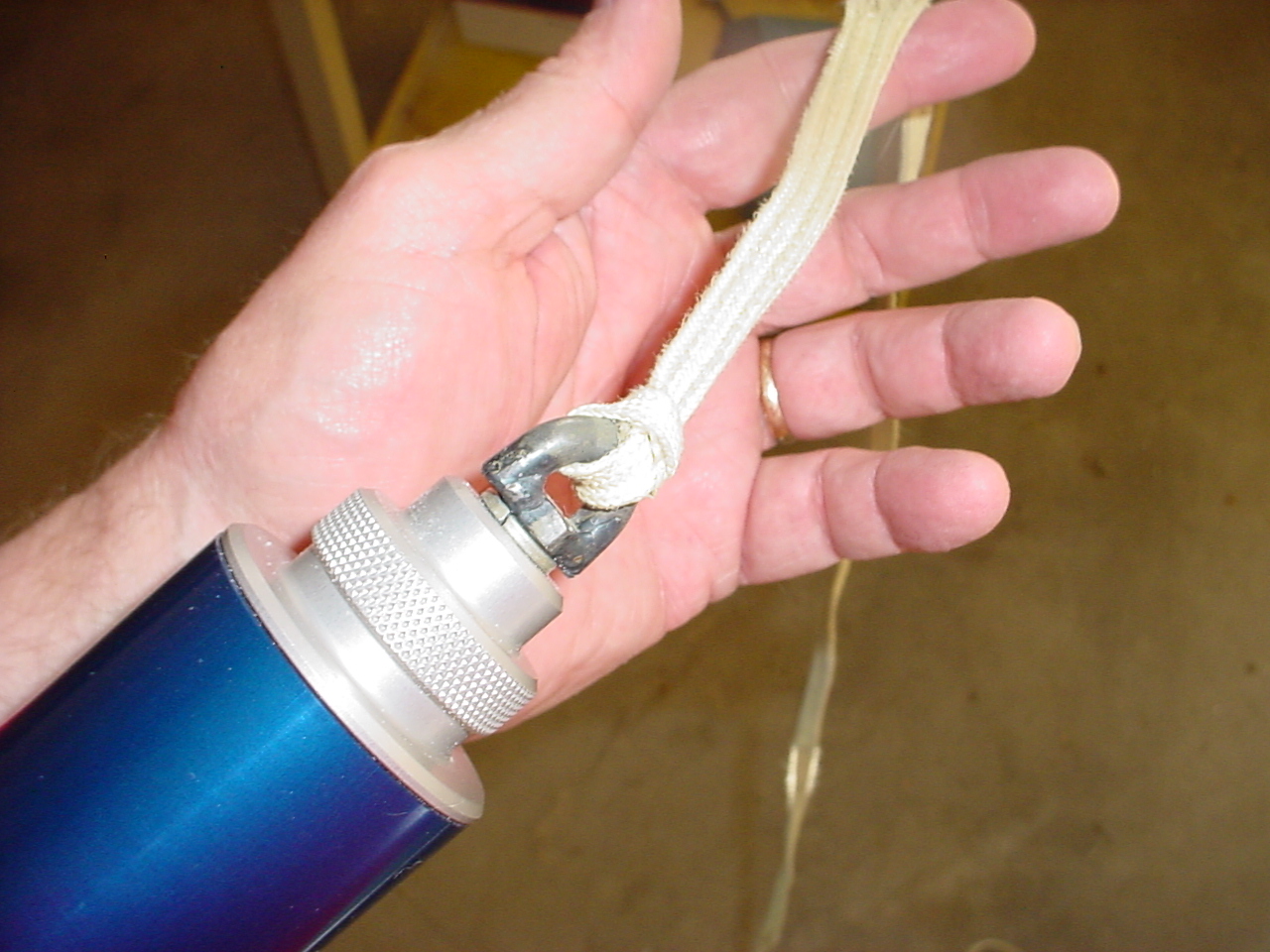
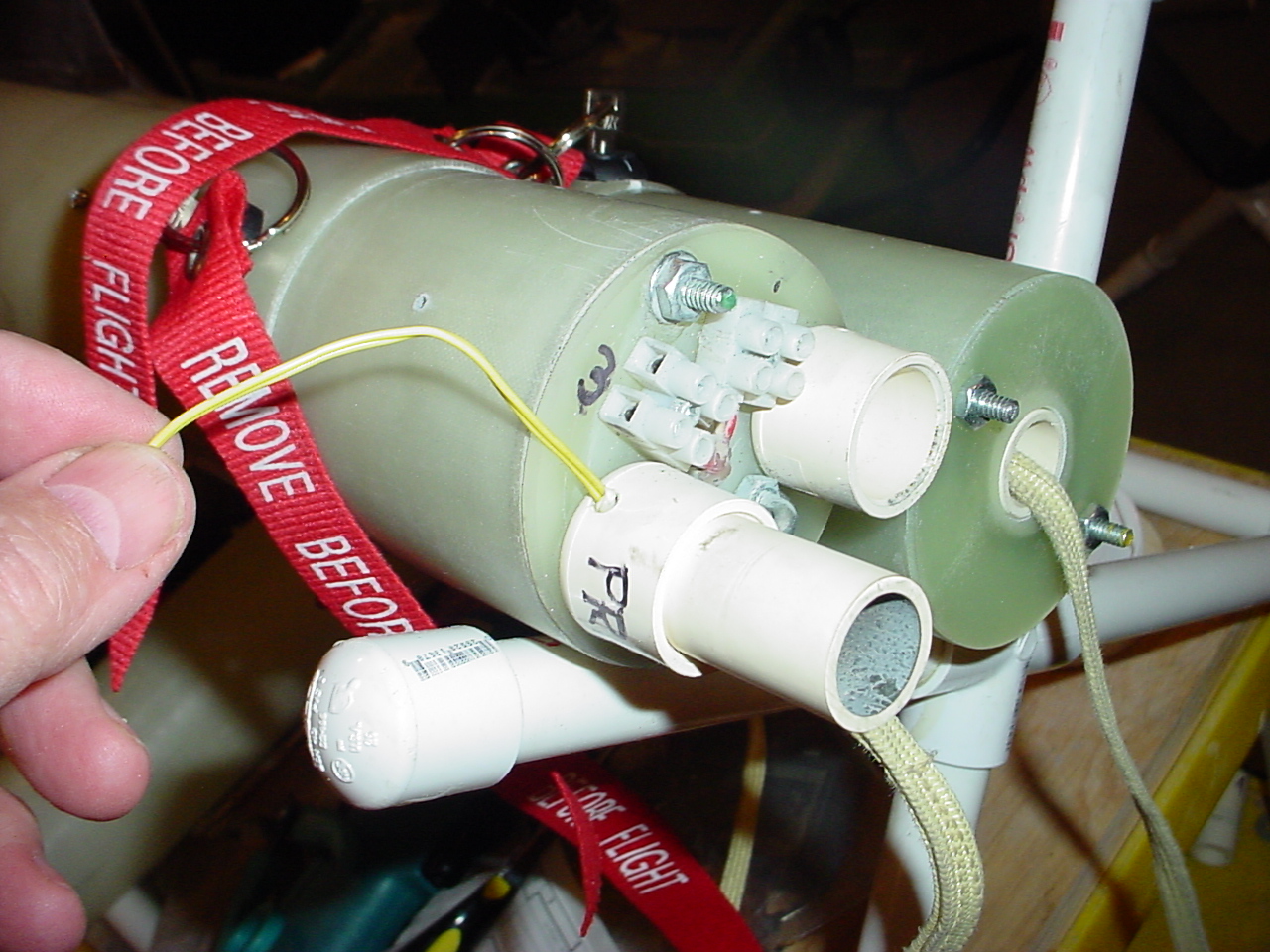
Full Size: http://www.telerover.com/rockets/MS/MS_139.jpgThe cord coming out of the igniter avaby was directly attached to the motor by a custom eye-bolt I welded up. (to save space).
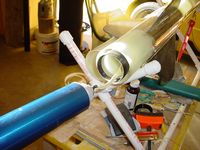
Full Size: http://www.telerover.com/rockets/MS/MS_136.jpg
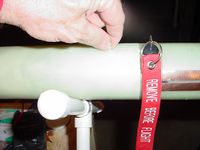
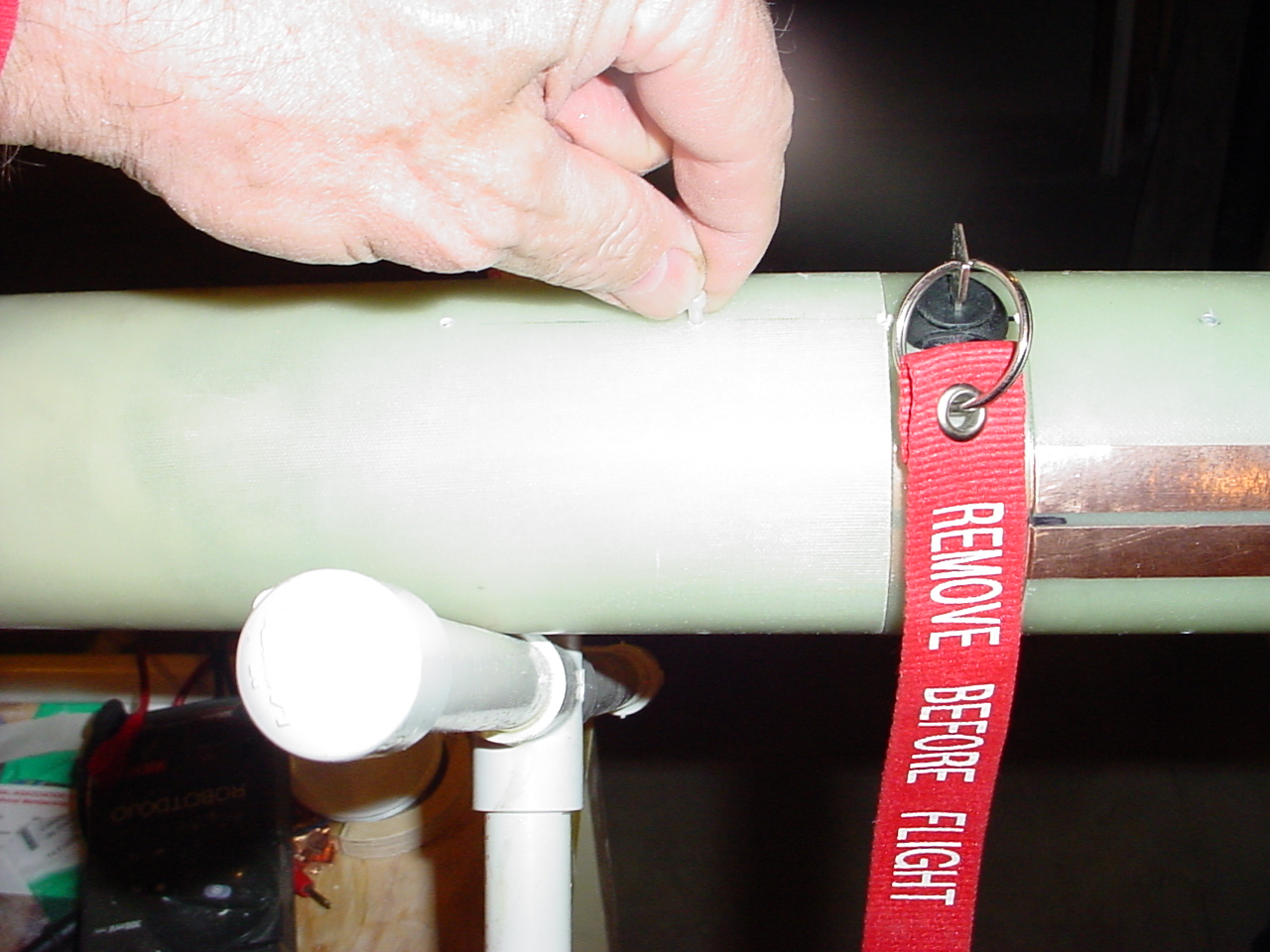
Full Size: http://www.telerover.com/rockets/MS/MS_140.jpgI documented the construction of this bird fairly well, so here’s a shot of me putting in the actual shear pins prior to flight.
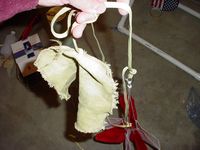
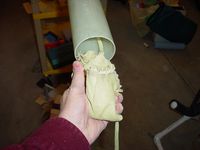
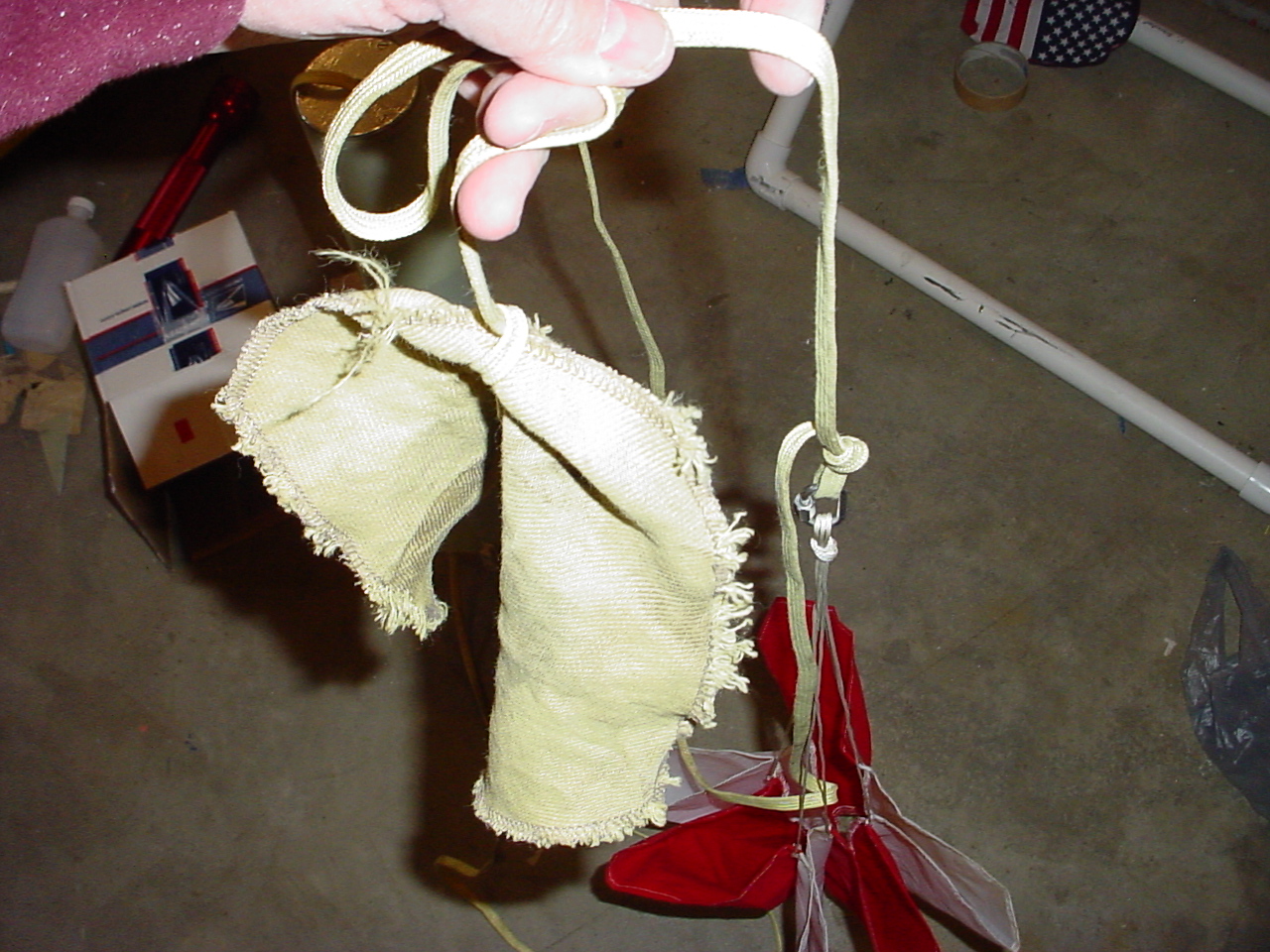
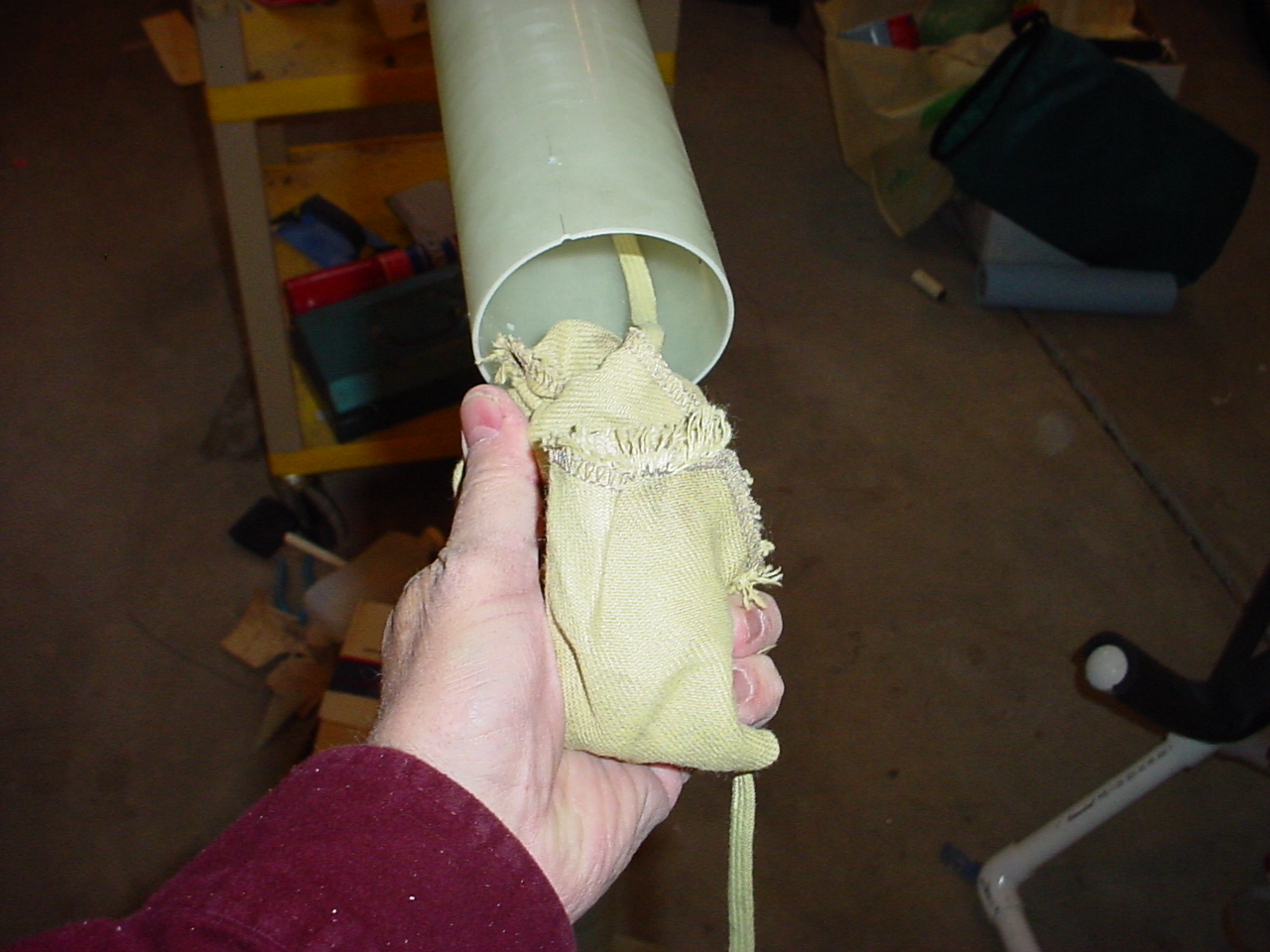
Full Size: http://www.telerover.com/rockets/MS/MS_156.jpgHere’s the chute, blanket, before being stuffed in the tube
Full Size: http://www.telerover.com/rockets/MS/MS_184.jpg
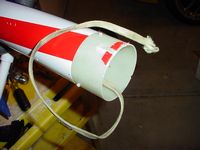
Full Size: http://www.telerover.com/rockets/MS/MS_185.jpgAnd that same cord after it was ripped apart at the slip-knot. The quick-link also gave way and dissapeared. You can see the crack in the airframe where it tried to zipper. The heads of the shear pins are still in the airframe (which was threaded – the coupler had clearance holes):
Full Size: http://www.telerover.com/rockets/MS/MS_224.jpg2008-05-08 at 7:25 am #47845slipstick
Awesome photo analysis. Very interesting. So I guess it boils down to: Why did the sustainer separate prematurely?
The separation happened with the sustainer under thrust, so drag separation should be ruled out.
Could a lack of venting cause enough pressure to overcome the motor thrust and the shear pins? It seems unlikely but a quick calculation could help answer that one.
It appears that one of the 1/8″ vent holes was blocked, the one on the fin can end.
Using the pressure calculator at http://www.digitaldutch.com/atmoscalc/
The pressure at the N Pawnee (5500 feet at 50 degF) site would be 12.0 PSI
At 5800 AGL or 11,300 feet ASL, the pressure would be 9.6 PSI or 2.4 PSI difference.
A 3″ airframe has a cross sectional area of 7 sq inches
2.4 PSI X 7 in^2 = 16.96 pounds-force.If I enter that data into the calculator at http://www.mrhq.org/software/clcltrs/clcltrs.shtml it says it will safely shear two 4-40 nylon screws. So maybe I was right at the limit. six 4-40 screws would have been better or a set of 6-32’s.
A premature firing of the charge remains a possibility. Could you tell anything about whether the charge fired while the pieces were together by the post-flight condition of the upper part of the sustainer?
No, both charges were set off, and I assume since this setup has flown four times before, they went off at the right time (at the apogee detected after separation). Could the speed have affected their triggering? Don’t know. I had 12 seconds of mach delay in it, and separation appeared to have occurred at about 6-7 seconds.
Maybe its a combination of the shear pins partially drag separating at the end of thge booster thrust, then getting kicked by the sustainer motor. I’m leaning toward blaming too light of shear pins and not enough vent hole area at the moment. I also think that going to an accelerometer based deployment charge would be better past mach.
Keep the thoughts coming!
2008-05-08 at 3:36 pm #47846muleParticipantMike,
OOPS, just saw the picture for my question….
Where did the tear actually occur? Did it pull away at the stitching opening the loop up or where?I was told years ago in a search and rescue class that looping a cord on it’s self like that causes a shear point where the strap/cord will actually cut it’s self in half. A figure eight loop (common climbing knot) is the best at keeping this force from acting on the strap/cord. In this case, I assumed that’s why all of you guys here use the chain repair or add on links.
2008-05-08 at 8:09 pm #47847AdrianParticipantNice job with the preflight closeout pictures. That’s what we do in the spacecraft industry; I should do that myself.
I’m a little skeptical about the pressure separation, because it would have to overcome the following factors:
-The sustainer’s thrust was compressing the two sections. What was the predicted acceleration at that point in the flight, and how much does the upper part of the sustainer weigh?
-The single vent hole would have reduced the internal pressure before the event (Vern’s site has some equations for this)
-If the top section did start to move apart, the overlap section is so long that the volume would increase significantly, lowering the pressure further.
-The drag of the top section should have helped to push it down.
If you add up all the forces on the top section at that time of flight, I bet there’s a lot of compression holding the two pieces together, even without venting.
Did Rocksim predict that the sustainer would go through Mach? If so, what part of the flight? Maybe you can use a shop vac or something to verify that in its current state the altimeter’s Mach inhibit timer really would prevent deployment at that point in the flight.
Was the drogue deployment av bay sealed off from the aft section of the sustainer? Just speculating here, but did the bottom of the upper section of the sustainer seat firmly against the top of the lower section’s outside tube when the shear pins were in place? If not, perhaps compression of the two sections during the two burns helped to shear the pins. And if the two sections compressed into each other during the burn, it would show up as a pressure spike (and false apogee) in the altimeter if there was a leak path into the sustainer’s av bay.
2008-05-08 at 10:58 pm #47848slipstick
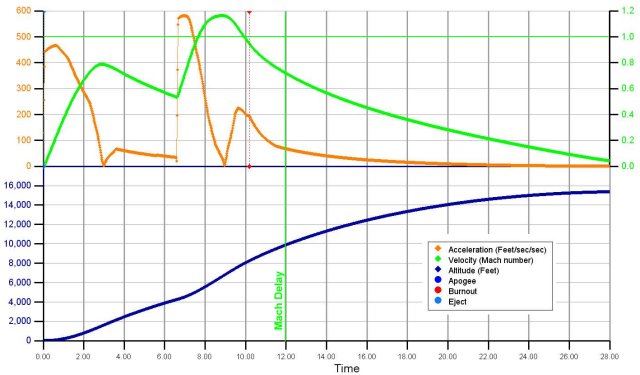
Here’s the Rocksim flight profile showing Mach 1.17
http://www.telerover.com/rockets/MS/Slipstick_IV_FlightProfile.pdf
The boost section of the sustainer weighed 6 pounds and the rest was 4 pounds. The booster itself was also 6 pounds.
All orifices in the avbay bulkheads were sealed sealed with hot glue. The bulkhead to caps aren’t watertight but they do overlap internally and externally.
Full Size: http://www.telerover.com/rockets/MS/MS_149.jpgYou might be onto something where the sections may not have been put together tightly when the holes for the shear pins were matched drilled, which could have caused some weakening under initial booster thrust. The K700 had 143 lbs thrust which would have been about 9 g’s (143 lbs-f /16 lbs) on the rocket, extrapolating to the joint in question would have put 36 pounds of force (4 lbs x 9G’s) on the 4-40 screws. They could have partially sheared.
The avaby electronics did get some charge residue in them from an earlier ground test. No one that I’ve talked to has said that the baro sensors would have been affected by that.
A broken forward closure could have caused the separation as there is an opening from the fin can through the igniter avabay (a central tube that the shock cord ran through) which could have pressureized the drogue section. See the above picture.
Finding the tail would tell the tale. 🙄
2008-05-09 at 3:39 pm #47849AdrianParticipantAccording to your Rocksim plot, the sustainer would have been supersonic from somewhere around 12 seconds after liftoff to 14 seconds after liftoff. Could you zoom in on the first 20 seconds and re-post? In the rocksim plot preferences you can make the plot end at apogee or other events. I’m afraid that your Mach inhibit timer may have expired just in time for the altimeter to react to a Mach-induced false apogee.
2008-05-09 at 10:04 pm #47850slipstick
Adrian, Here’s a better chart (below). It different because I remembered getting rid of the coast between stages.
I set the mach delay on both the RRC2X and mini to 12 seconds. That’s the maximum allowed time for the X (but the mini goes up to 30) so I set them to the same delay. 12 seconds is plenty for a single stage rockets but a two stage bird has twice the possible thrust time. If there is a 5-6 second delay between the stages firing the time at mach gets even longer. In the chart below you can look at the green lines which is the predicted velocity. If the sustainer is two seconds hesitating to fire its motor than the sustainer will still be mach after 12 seconds. A 20 second delay would have been better. If the MW altimeters produce a false apogee above mach then that’s part (or all) of my problem. Does this make sense?
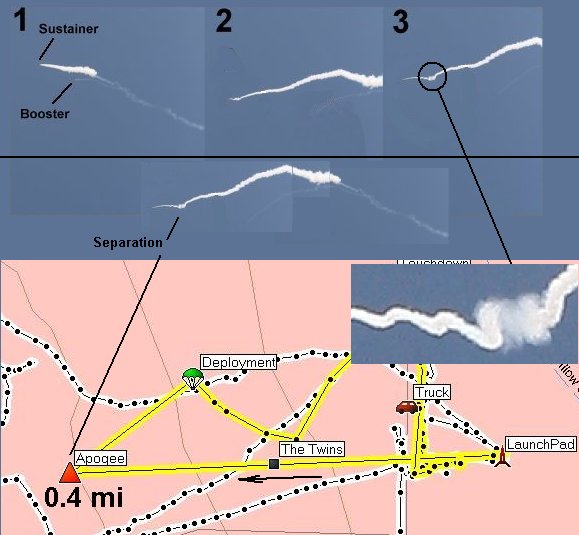
2008-05-10 at 2:30 am #47851muleParticipantIf you look at the ignition of the sustainer trail (in pic 2) vs the flight to that point, there is a definite change in angle of flight. I would say roughly 20*, is this the delay in ignition you are looking for? Or, am I just stating the obvious????? 😳
2008-05-10 at 3:53 am #47852Bruce R. Schaefer
Good luck, guys!
2008-05-10 at 5:55 am #47853slipstick
If you look at the ignition of the sustainer trail (in pic 2) vs the flight to that point, there is a definite change in angle of flight. I would say roughly 20*, is this the delay in ignition you are looking for? Or, am I just stating the obvious?????
The fact that the booster contrail is not in that picture, only a wispy trail, leads me to believe that there was more delay than the programmed 1/2 second. That picture was rotated 60 degrees to the right to make the track look more vertical (and to make the picture fit the forum page better). This picture below is the three pictures in sequence that Bert took as it was heading west, superimposed on each other. Up to the separation, the ground track is straight, however the Dc20 only updates once every 5 seconds, and that is the total burn time of the motors. So… you could be right-on indicating a change in direction. Something had to cause that kink in the smoke trail. A bit later, right before the separation occured, there was a very violent spin happening and afterwards the motor trail smoothed out again. The momentum should have kept it going in the same general direction. Keep in mind the rocket was weathercocking a bit to the west.
-
AuthorPosts
 slipstick
 mule
mule Adrian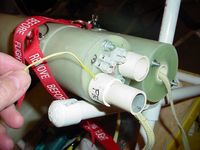

 Bruce R. Schaefer
- You must be logged in to reply to this topic.